






Fusion Splicer Battery Life: How Long It Lasts and How to Extend It

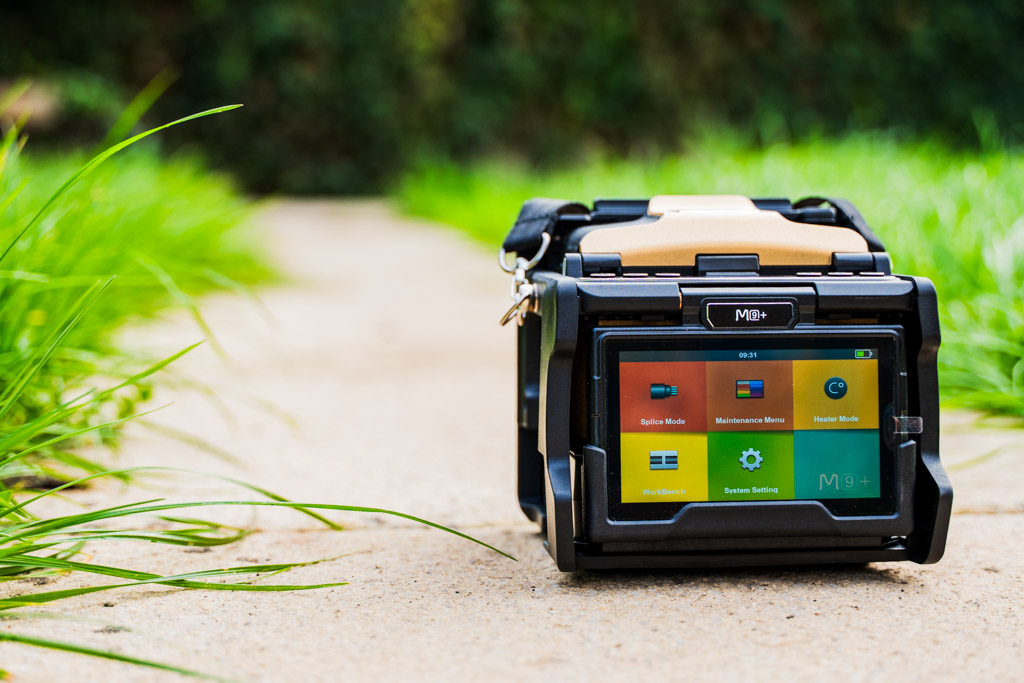
In the field, your fusion splicer battery decides how much work gets done before you need a charger. Running out halfway through a closure costs time, and a tired battery that no longer holds its charge can quietly cut a working day short. This guide explains what to expect from different battery capacities, what affects runtime and how to get the most from every battery.
How many splices per charge?
INNO fusion splicers use batteries of different capacities, depending on the model and the kind of work it is designed for. One cycle below means one splice plus one heat-shrink cycle.
| Battery capacity | Typical cycles per charge | Best suited to |
|---|---|---|
| 3,000 mAh | around 200 | FTTP drops and short jobs where weight matters |
| 5,200 mAh | up to 300 | mixed work across a normal day |
| 7,000 mAh | around 350 | longer days with a mix of build and repair |
| 9,000 mAh | up to 500 | large builds, backbone work and emergency restoration |
These are typical figures. Real runtime depends on how you work and the conditions on site.
What drains a battery faster
How you use the splicer
The heater uses a large share of the energy in each cycle. Continuous splicing with long heat cycles drains a battery faster than occasional splices spread across the day. Screen brightness and leaving the splicer switched on between jobs also add up.
Temperature
Cold slows the chemical reactions inside a battery and reduces the power it can deliver. On a frosty morning in a footway box you will see fewer cycles than in a warm cabinet. Heat does the opposite kind of damage and speeds up long-term wear. Keep batteries out of direct sun and avoid leaving them in a freezing van overnight.
Charging habits
Repeatedly running a battery to zero, using non-original chargers or leaving it overcharging in poor conditions all shorten its life. Always use the charger and adapter made for your splicer.
Keep working while you charge
INNO fusion splicers can operate while connected to external power. If the battery runs low during an urgent repair, plug the splicer in and carry on instead of waiting for a full charge. A spare charged battery or a vehicle power adapter is the simplest insurance for long days.
How to make batteries last longer
- Charge before it is empty. Recharge at around 20 to 30 percent rather than running the battery flat.
- Store it part-charged. If a splicer will be unused for a while, store the battery at around 50 percent charge, somewhere cool and dry.
- Keep the contacts clean. Dirt and corrosion on the contacts reduce the power the battery can deliver.
- Warm up in winter. Keep batteries in the cab or a bag rather than in a cold load area.
- Replace tired batteries. If a battery that used to last all day now fades by lunchtime, it has reached the end of its useful life.
Monitoring batteries across a team
For companies with several splicers, View Pro Manager shows battery status across connected devices. Supervisors can see which units need charging before crews leave, and spot batteries that are losing capacity so they can be replaced before they cause delays.
Which battery capacity is right for you?
Choose a larger battery for long shifts, backbone work and sites with no easy access to power. Choose a compact battery if you climb poles, work from ladders or move between many short jobs, where weight matters more than runtime. If you are choosing a splicer at the same time, our guide to core alignment vs cladding alignment explains the other main decision.
Replacement batteries and power from UK stock
Uptero holds genuine INNO batteries and power adapters in UK stock, with dispatch the same or next working day to the UK and Ireland. Not sure which battery fits your splicer? Contact us with the model and we will confirm.
If a new battery does not solve a power problem, the fault may be in the charging circuit or the splicer itself. Our UK service and repair centre can test and fix it, usually within 3 working days. Need a splicer in the meantime? Ask about fusion splicer hire.
It depends on capacity. As a guide, a 3,000 mAh battery gives around 200 splice and heat cycles, 5,200 mAh around 300, 7,000 mAh around 350 and 9,000 mAh up to 500 cycles per full charge.
Low temperatures slow the chemical reactions inside the battery, which reduces the power it can deliver. Keep batteries warm before use, for example in the van cab rather than the load area.
Yes. INNO fusion splicers can be used while connected to external power, so a low battery does not have to stop work.
Uptero holds genuine INNO replacement batteries and power adapters in UK stock, with dispatch the same or next working day.